Introduction
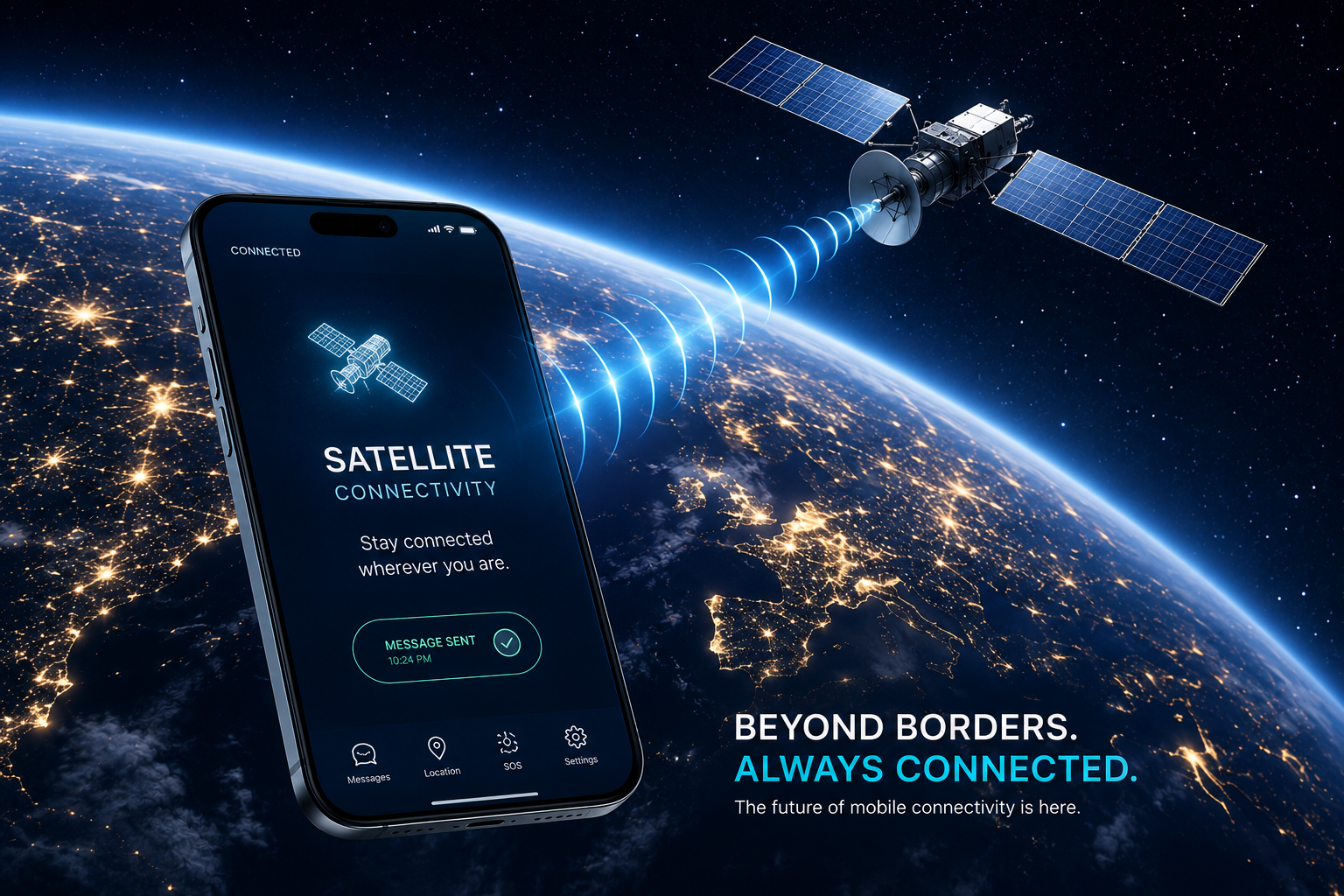
Imagine travelling through a remote mountain area, driving along an isolated highway, or exploring the countryside without worrying about losing your mobile signal. In 2027, satellite connectivity could make this experience more accessible by allowing compatible smartphones to connect directly to satellites when traditional mobile networks are unavailable. Instead of depending entirely on nearby cell towers, users could access selected communication services through satellites orbiting Earth.
Satellite-to-phone technology is becoming an important development in the telecommunications industry. Companies are working to connect ordinary smartphones to satellite networks, potentially improving communication in rural communities, remote travel destinations, and emergency situations. For people in the United States and the United Kingdom, this technology could offer another way to stay connected beyond the limits of conventional mobile coverage. However, its availability, supported features, pricing, and performance will depend on the network provider, device compatibility, and location.
What Is Satellite-to-Phone Technology?
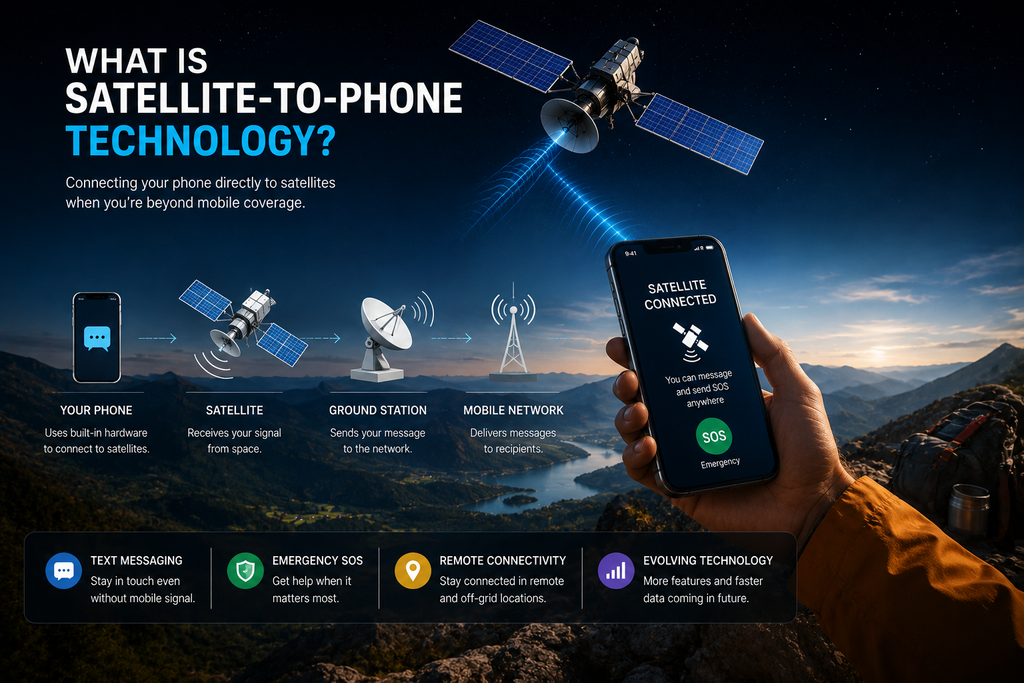
Satellite-to-phone technology enables compatible mobile devices to communicate directly with satellites instead of relying exclusively on ground-based cellular towers. Traditional satellite phones generally require specialised hardware, whereas direct-to-cell services aim to bring certain satellite communication features to compatible regular smartphones.
Satellites act as part of an alternative communication network, helping transmit messages and, where supported, other types of data. When a smartphone moves outside conventional cellular coverage, a compatible satellite service may provide connectivity if the device can establish a connection and the necessary service is available.
This technology does not automatically turn every smartphone into a full satellite internet device. Some services initially focus on text messaging, emergency communication, or selected applications. More advanced capabilities depend on satellite capacity, spectrum availability, network development, and the technical limitations of individual devices.
How Does Satellite Connectivity Work on Smartphones?
Satellite connectivity involves several components working together. Satellites orbiting Earth communicate with compatible devices and connect with supporting telecommunications infrastructure. Depending on the system, signals may pass through ground stations and mobile network equipment before reaching their intended destination.
Unlike traditional cellular networks, which rely on nearby terrestrial towers, satellite systems can cover areas where building and maintaining conventional infrastructure is difficult. This makes them particularly useful for remote regions, although satellite connections can be affected by obstacles, environmental conditions, and the position of the device.
Users may need to move outdoors or find a location with a clearer view of the sky to establish a connection. Buildings, dense forests, steep mountains, and other obstructions can make communication more difficult. Satellite services may also have different performance characteristics from ordinary mobile networks.
In 2027, consumers should check whether their smartphone, mobile carrier, subscription, and location are supported before expecting satellite connectivity to work.
The Role of Starling in Satellite Phone Technology
Starling, operated by SpaceX, is one of the companies helping advance satellite connectivity. Its direct-to-cell initiative aims to enable compatible mobile devices to connect through satellites that function as cellular network extensions. The broader goal is to help mobile users remain connected in places where conventional cellular coverage is limited or unavailable.
For consumers, this approach could make satellite connectivity more convenient because it may work with supported existing smartphones rather than requiring everyone to purchase a dedicated satellite handset. However, compatibility is not universal, and service availability depends on supported devices, telecommunications partners, local regulations, and the specific service offered.
Satellite-to-phone services are also not identical to Starling’s conventional satellite broadband offering. A home satellite internet connection typically uses dedicated equipment, while direct-to-cell technology is designed to communicate with compatible mobile devices. Understanding this difference helps consumers avoid confusing two related but distinct services.
By 2027, continued network development could expand the possibilities for satellite-enabled mobile communication, but the exact features available to customers will depend on actual commercial launches and service announcements.
What Could Satellite Smartphones Offer in 2027?
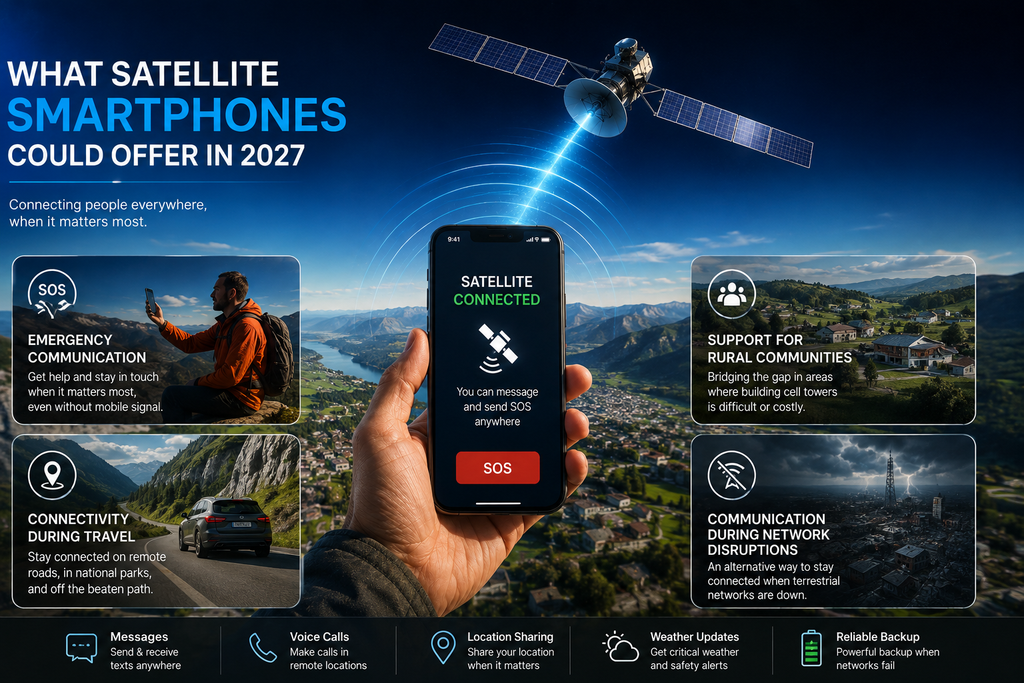
The potential benefits extend beyond simply sending a message from an area without mobile coverage. As satellite networks and compatible devices improve, satellite connectivity could support several useful communication scenarios.
One of the most important potential benefits is the ability to contact others when conventional cellular coverage is unavailable. Supported satellite messaging features may help users share their situation or request assistance in certain emergencies. However, satellite connectivity should not be treated as a guaranteed replacement for emergency services or dedicated safety equipment.
Travellers exploring national parks, remote roads, rural areas, or isolated destinations could benefit from additional communication options. In the United States, this may be relevant in sparsely populated regions, while in the United Kingdom it could help in selected remote areas where compatible satellite services are available.
Satellite networks could supplement terrestrial mobile infrastructure in locations where building additional cell towers is expensive or impractical. Although they will not solve every connectivity problem, they may provide another option for people living or working beyond reliable cellular coverage.
Satellite services could offer an alternative communication route when terrestrial networks are unavailable in a particular area. Nevertheless, satellite networks also have technical limitations and should not be assumed to remain operational under every disaster or emergency condition.
Satellite Connectivity vs Traditional Mobile Networks
Satellite-to-phone technology and conventional mobile networks serve related purposes, but they have different strengths. The following table highlights their general characteristics.
| 𝐅𝐞𝐚𝐭𝐮𝐫𝐞 | 𝐓𝐫𝐚𝐝𝐢𝐭𝐢𝐨𝐧𝐚𝐥 𝐌𝐨𝐛𝐢𝐥𝐞 𝐍𝐞𝐭𝐰𝐨𝐫𝐤𝐬 | 𝐒𝐚𝐭𝐞𝐥𝐥𝐢𝐭𝐞-𝐭𝐨-𝐏𝐡𝐨𝐧𝐞 𝐓𝐞𝐜𝐡𝐧𝐨𝐥𝐨𝐠𝐲 |
| Main infrastructure | Cellular towers | Satellites and supporting network infrastructure |
| Coverage | Depends on tower availability | Potentially reaches areas beyond tower coverage |
| Device requirements | Compatible mobile phone and service | Compatible phone and supported satellite service |
| Best-known advantage | Everyday voice and data connectivity | Communication in selected remote locations |
| Performance | Depends on network congestion and signal | Depends on satellite capacity and conditions |
| Indoor connectivity | Often available, depending on signal | Can be limited by buildings and obstructions |
| Service availability | Established across many populated areas | Varies by provider, location, and supported features |
For most everyday activities, traditional mobile networks will continue to provide the main connection for many users. Satellite services are better understood as a complementary option that may extend connectivity when ordinary coverage is unavailable.
Challenges That Could Limit Satellite Phone Technology
Despite its potential, satellite-to-phone technology faces several challenges. One important limitation is capacity. Satellites must serve users across large geographical areas, and available bandwidth is not unlimited. Supporting simple messages is generally less demanding than delivering fast, reliable broadband to large numbers of smartphones simultaneously.
Device compatibility is another consideration. Not every smartphone contains the necessary supported technology, and even compatible devices may require an eligible carrier or subscription. Service availability can also differ between countries because telecommunications spectrum, licensing, and commercial partnerships vary.
Pricing could influence adoption as well. Some services may be included in selected mobile plans, while others could require additional fees or subscriptions. Consumers should compare actual plan conditions rather than assuming satellite connectivity will be free.
Privacy and security also deserve attention. Users should understand how providers handle messages, location information, account details, and other data. As with any connected service, strong account security and careful management of personal information remain important.
Finally, satellite communication cannot guarantee uninterrupted service in every location or emergency. Consumers who regularly travel into remote areas should consider their specific safety requirements and carry appropriate backup equipment when necessary.
Should You Buy a Satellite-Ready Smartphone in 2027?
Before purchasing a smartphone primarily for satellite connectivity, consider how frequently you travel beyond normal mobile coverage. Someone who regularly hikes, camps, works outdoors, or travels through isolated regions may find supported satellite features more useful than someone who spends most of their time in cities.
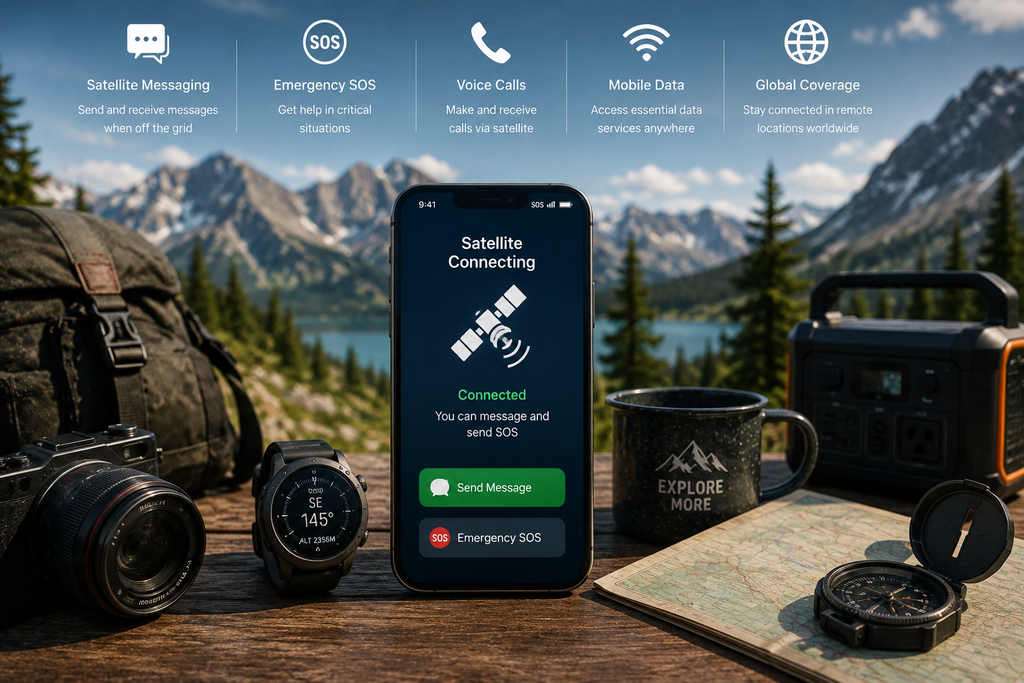
Check the exact capabilities of the device and service. Determine whether satellite messaging, emergency features, voice communication, or mobile data are supported. These capabilities are not interchangeable, and a device advertised as satellite-ready may offer only a limited set of functions.
Also compare subscription costs, carrier restrictions, coverage maps, battery performance, and software support. If your main priority is everyday internet access, a reliable conventional mobile plan may remain the more practical choice. If your priority is additional communication in remote locations, satellite connectivity could provide valuable peace of mind.
For UK and US consumers, the most sensible approach is to evaluate officially supported services in their own country and verify the latest compatibility information before buying.
Final Thought
Satellite phone technology could become one of the most useful developments in mobile connectivity by 2027. By helping compatible smartphones communicate through satellites, services such as Starling Direct to Cell could reduce dependence on traditional cellular towers in selected situations. The greatest benefit may be the ability to maintain communication while travelling through remote areas or facing gaps in conventional coverage.
However, satellite connectivity is not a complete replacement for mobile networks, and its performance will depend on coverage, device compatibility, pricing, and supported features. Consumers should focus on practical capabilities rather than marketing promises. As the technology develops, satellite-enabled smartphones could become an increasingly valuable addition to the connected world, helping more people stay in touch when ordinary mobile signals are out of reach.
Hashtags
#SatelliteTechnology #Starling #SatellitePhone #SmartphoneTechnology #SatelliteInternet #DirectToCell #FutureTechnology #TechTrends2027 #MobileConnectivity #TechLogic
Keywords
satellite phone technology 2027, Starling satellite phone, satellite internet on smartphones, direct-to-cell technology, satellite connectivity 2027, smartphone satellite connection, satellite messaging, phone without mobile signal, Starling Direct to Cell, future smartphone technology, satellite mobile network, emergency satellite communication, satellite internet UK, satellite internet USA