
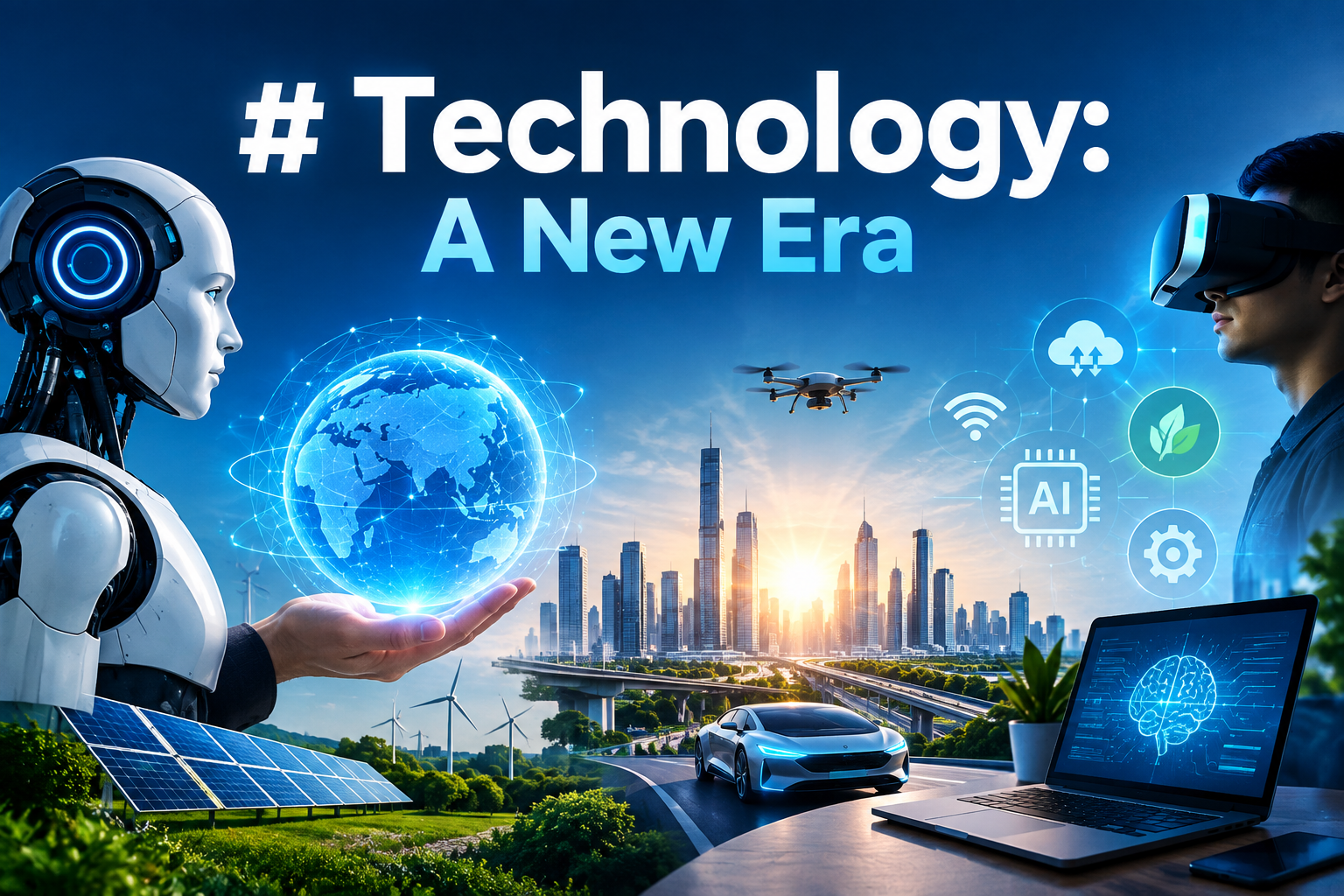
- Introduction: Entering a New Technological Era
Technology has become one of the most powerful forces shaping the modern world. From the way people communicate to the way businesses operate, technology has transformed almost every aspect of human life. What once seemed impossible is now part of our everyday routine. Smartphones, artificial intelligence, digital platforms, robotics, and high-speed internet have created a connected world in which information and services can be accessed within seconds. This rapid development marks the beginning of a new era—an era in which technology is not simply a tool but an important part of human progress.

- Technology and Modern Communication
One of the most significant changes brought by technology is the transformation of communication. In the past, people depended on letters, landline telephones, and physical meetings to communicate over long distances. Today, smartphones and the internet allow people to communicate instantly through messages, video calls, emails, and social media. Families and friends living in different countries can remain connected, while students and professionals can collaborate with people from around the world. Technology has made communication faster, easier, and more accessible.
Education has also experienced a major transformation. Traditional classrooms are increasingly supported by digital learning tools, online courses, educational applications, and virtual classrooms. Students can access lectures, books, research materials, and educational videos from almost anywhere with an internet connection. Technology has also made learning more interactive through simulations, digital presentations, and educational software. These developments provide students with opportunities to explore subjects beyond the limits of a traditional classroom.
- Advancements in Healthcare
Another important area influenced by technology is healthcare. Modern medical technology has improved the ability of healthcare professionals to diagnose and treat diseases. Advanced imaging systems, computer-assisted procedures, electronic health records, and telemedicine have made healthcare more efficient in many parts of the world. Patients can sometimes consult healthcare professionals remotely, reducing the need for unnecessary travel. At the same time, researchers use advanced technology to study diseases and develop new treatments.
- Technology and the Business World
Technology has also changed the world of business and employment. Digital platforms allow companies to reach customers across national borders, while online banking and electronic payment systems have made financial transactions more convenient. Many businesses now use data analysis, cloud computing, automation, and artificial intelligence to improve their operations. Remote work has also become increasingly common, allowing employees to perform many professional tasks from home or other locations.
- The Rise of Artificial Intelligence
Artificial intelligence is one of the most important developments of the new technological era. AI systems can process large amounts of information, recognize patterns, generate content, and assist people with a wide range of tasks. In education, AI can support personalized learning. In business, it can help analyze data and automate routine processes. In science, it can assist researchers in studying complex problems. However, AI also raises important questions about privacy, accuracy, employment, and responsible use.
- Transforming Transportation
The influence of technology can also be seen in transportation. Modern vehicles increasingly use digital systems to improve safety, navigation, and efficiency. Electric vehicles are becoming an important part of efforts to reduce dependence on traditional fuels. GPS technology has changed the way people travel by providing real-time directions and location information. Future developments in autonomous vehicles, smart transportation systems, and sustainable energy may transform how people and goods move around the world.
- Digital Privacy and Cybersecurity
Despite its many benefits, technology also presents challenges. One major concern is digital privacy. People share large amounts of personal information through websites, applications, and online services. Protecting this information from unauthorized access has therefore become increasingly important. Cybersecurity threats such as hacking, scams, and data theft can affect individuals, organizations, and governments. Digital literacy and responsible online behavior are essential for reducing these risks.
- Bridging the Digital Divide
Another challenge is the digital divide. Not everyone has equal access to modern technology or reliable internet services. Differences in income, infrastructure, education, and geographical location can prevent some communities from benefiting fully from technological progress. Governments, educational institutions, and organizations can help address this problem by improving digital infrastructure and providing opportunities for people to develop technological skills.
- Technology and Environmental Responsibility
Technology can also affect the environment. The production and disposal of electronic devices can contribute to electronic waste, while large digital systems require significant amounts of energy. At the same time, technology can help address environmental problems through renewable energy, smart electricity systems, environmental monitoring, and more efficient industrial processes. The goal should therefore be to develop technology that supports both human progress and environmental responsibility.
- The Future of Technology
The future of technology is likely to bring even greater changes. Developments in artificial intelligence, biotechnology, robotics, renewable energy, quantum computing, and space technology may open new possibilities for humanity. However, technological progress should not be measured only by how advanced machines become. It should also be measured by how effectively technology improves people’s lives, expands opportunities, protects human rights, and supports a sustainable future.
- Conclusion: Building a Better Future
In conclusion, Technology: A New Era represents a period of extraordinary change and opportunity. Technology has transformed communication, education, healthcare, business, transportation, and many other areas of life. At the same time, it has created challenges involving privacy, cybersecurity, inequality, employment, and the environment. The future will depend not only on technological innovation but also on the choices people make about how that innovation is used. If technology is guided by knowledge, responsibility, creativity, and ethical values, it can become a powerful force for building a more connected, efficient, and sustainable world.

