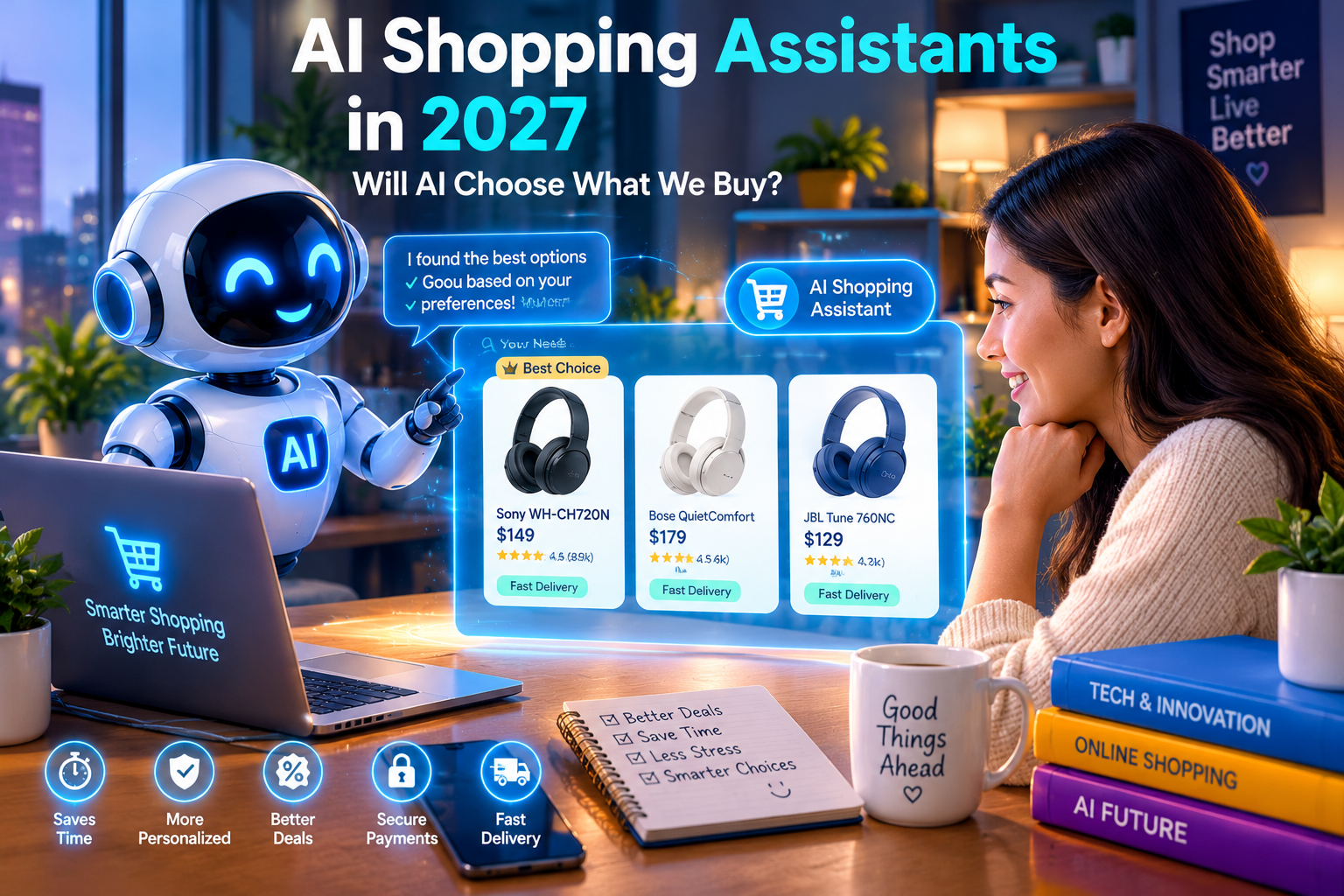
Online shopping has changed dramatically over the last decade. Consumers once had to visit physical stores to compare products, but websites and mobile apps made shopping possible from almost anywhere. Search engines then made it easier to discover products, while recommendation systems started suggesting products based on browsing history, previous purchases, location, and interests. The next major change could be even bigger: AI may start doing much of the shopping for us. By 2027, AI shopping assistants could become an important part of online commerce, helping consumers research products, compare prices, understand reviews, and make purchasing decisions without spending hours browsing different websites.
This emerging model is often described as agent commerce, where AI systems can understand a user’s requirements and perform multiple steps on their behalf. Instead of searching through dozens of websites, comparing specifications manually, checking delivery dates, and reading hundreds of reviews, shoppers could simply explain what they need to an AI assistant. The system could then search available options, compare them against the user’s preferences, and present a small number of suitable choices. This could make online shopping faster, more personalized, and considerably less complicated for everyday consumers.
What Is an AI Shopping Assistant?
An AI shopping assistant is more advanced than a traditional chat bot that simply answers questions. It is designed to understand a shopper’s requirements, research available products, compare different options, and help the user reach a purchasing decision. For example, instead of typing “best wireless headphones under $150” into a search engine and opening multiple websites, a shopper could tell an AI assistant, “Find me comfortable wireless headphones under $150 with good battery life, strong reviews, and fast delivery.” The AI could then analyze different products and narrow the results according to those requirements.
As these systems become more capable, some may also interact directly with online stores and commerce platforms. Shoplift, for example, has been expanding access to its product ecosystem for AI agents, creating a future in which AI assistants can help users browse products and prepare purchases while the customer remains in control of the final transaction. This represents an important shift because the AI is no longer simply providing information; it is beginning to participate in the shopping process itself.
Why Could AI Shopping Become Big in 2027?
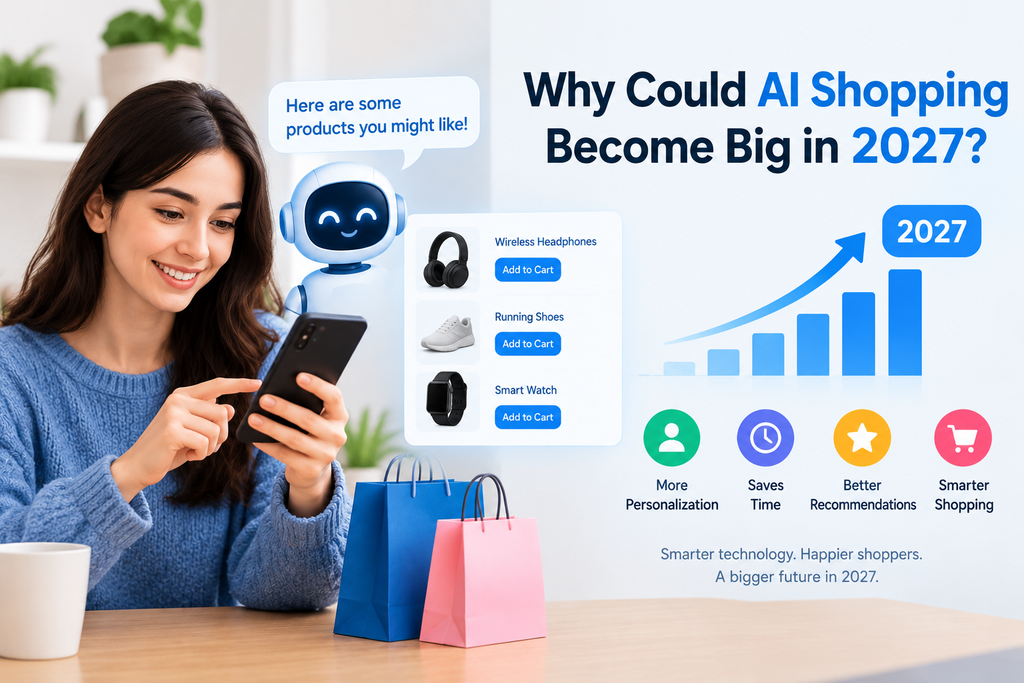
One major reason is simple: people do not always enjoy the research involved in shopping. Finding the right product can require a surprising amount of time. Consumers may need to compare prices, specifications, customer reviews, warranties, delivery options, return policies, and dozens of similar products before they feel confident about making a purchase. For expensive products, this research can take hours, while even simple purchases can involve unnecessary searching and scrolling.
AI could reduce much of this effort by turning shopping into a goal-based conversation. Instead of asking consumers to find the right keywords and visit multiple websites, AI can potentially understand what they are trying to accomplish and perform much of the research automatically. Recent consumer research in the US and UK suggests that people are already experimenting with AI-powered shopping tools, indicating that AI-assisted commerce could become considerably more common as these systems improve.
AI Could Change How People Search for Products
Traditional online shopping usually begins with a search box. A consumer enters keywords, receives a long list of products, opens different websites, and then manually decides which options are worth considering. This system has worked for many years, but AI could change the starting point from keywords to conversations. Instead of searching for an exact product name, shoppers could describe their needs in ordinary language and allow an AI system to interpret the request.
For example, someone might say, “I need a laptop for university under $1,000, with good battery life and enough performance for video editing.” Rather than returning thousands of loosely related results, an AI assistant could potentially understand the budget, intended use, performance requirements, and other preferences before recommending a smaller selection. This could make product discovery feel less like traditional search and more like talking to a knowledgeable personal shopping assistant.
Will AI Choose the Cheapest Product?
Not necessarily. A sophisticated AI shopping assistant should not simply select the cheapest available product because price is only one part of a purchasing decision. Consumers may care about product quality, reliability, customer ratings, delivery speed, warranty coverage, return policies, brand reputation, and long-term value. An AI that understands these factors could potentially produce recommendations that are more useful than a simple list ordered by price.
Rationalization could make this even more interesting. Imagine a shopper who regularly chooses products with longer warranties, even when they cost slightly more. If an AI assistant understands that preference, it could prioritize products offering better warranty protection rather than automatically selecting the cheapest option. In this way, AI shopping could move from generic recommendations toward highly personalized purchasing decisions.
The Biggest Challenge: Trust
The biggest obstacle to AI-powered shopping may not be technology. It could be trust. Consumers may be comfortable asking an AI to recommend a pair of headphones, but allowing that same system to spend their money creates a completely different level of responsibility. People will naturally want to know whether the AI selected the product fairly, whether the information was accurate, and whether the system has any hidden commercial influence.
This becomes particularly important when AI systems move from recommending products to actually preparing or completing purchases. Consumers will need clear controls over what an AI is allowed to do. A realistic approach could involve different permission levels. Users might allow an AI to search and compare products freely but require confirmation before any payment is made. For low-cost repeat purchases, however, users could eventually allow automatic purchases within a predefined budget.
What About Privacy?
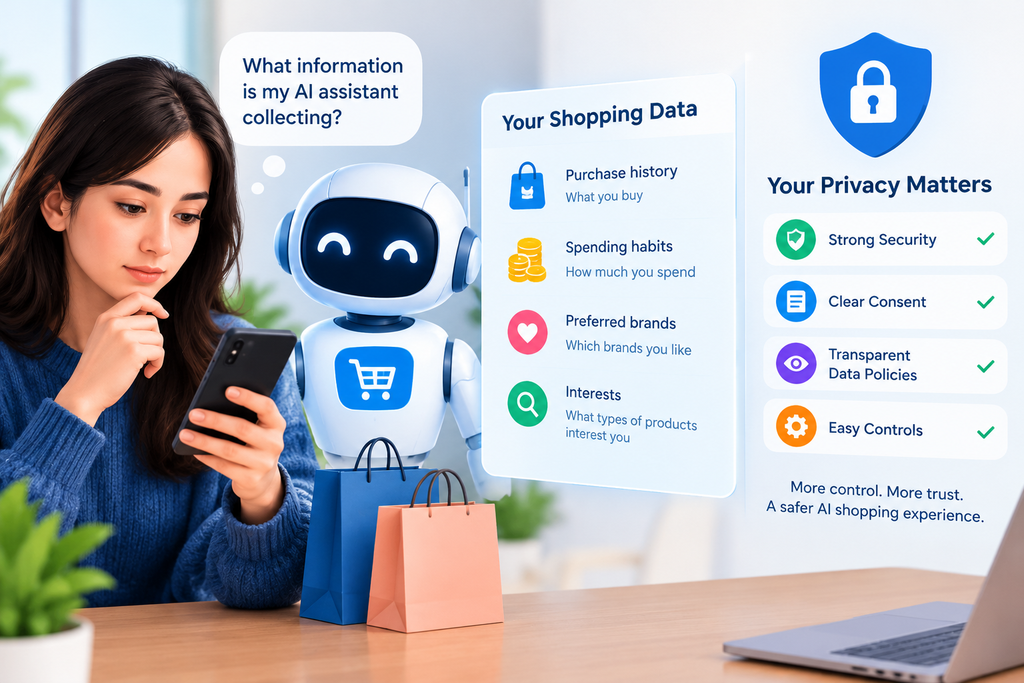
Privacy will become another major issue as AI shopping becomes more personalized. An AI assistant that understands your shopping habits could potentially know what products you regularly purchase, how much you normally spend, which brands you prefer, and what types of products interest you. The more information the system has, the more accurately it may be able to personalize recommendations, but that convenience also creates new privacy concerns.
Consumers will therefore need to understand exactly what information their AI assistant is collecting and how that information is being used. The UK has already been paying attention to privacy questions surrounding agent commerce and AI systems that can act on behalf of users. Strong security, clear consent, transparent data policies, and easy-to-understand controls could become essential features of future AI shopping platforms. Without these protections, consumers may hesitate to give AI systems greater control over their purchasing decisions.
How AI Could Affect Amazon, Google and Online Retailers
AI shopping could also change the balance of power in e-commerce. Today, many consumers begin their shopping journey on search engines, marketplaces, or individual retailer websites. Companies compete heavily for visibility because appearing near the top of search results can influence which products consumers see and eventually purchase. If shoppers increasingly rely on AI assistants, however, the AI itself could become the new gateway between consumers and retailers.
This could create a major challenge for online businesses. Retailers may need to make their product information easier for AI systems to understand and evaluate. Accurate descriptions, specifications, prices, availability, shipping information, reviews, and structured product data could become increasingly important. In the future, businesses may not only need to optimize their websites for traditional search engines; they may also need to make their products discoverable and understandable to AI shopping systems.
Could AI Shopping Be Better Than Traditional Shopping?
For many everyday purchases, AI shopping could be significantly more convenient. If a consumer already knows what they need, manually opening ten websites and comparing similar products can feel unnecessary. An AI assistant could potentially perform much of that research in a short period of time and present only the options that match the shopper’s requirements. This could save time while also reducing the frustration caused by overwhelming product choices.
However, traditional shopping will probably remain important for expensive, personal, or complicated purchases. People may still want to personally research cars, furniture, computers, clothing, and other major purchases before spending a large amount of money. AI is therefore more likely to reduce repetitive research than completely eliminate human decision-making. The most useful systems may be those that give consumers better information while allowing them to remain responsible for important final decisions.
What Could AI Shopping Look Like in 2027?
By 2027, a typical AI shopping experience could look very different from today’s search-based model. A consumer might simply tell an AI assistant what they need, including their budget, preferences, deadline, and desired features. The AI could search multiple sources, compare products, examine reviews, check delivery options, and filter the results according to the user’s preferences. Instead of receiving hundreds of products, the shopper might receive three or four carefully selected options with explanations of why each one fits their requirements.
After choosing a product, the AI could prepare the purchase and ask for confirmation before payment. For certain inexpensive products, consumers might even give the AI permission to automatically reorder them when supplies are running low. This would transform online shopping from a process where people constantly search, click, compare, and repeat the same tasks into a system where humans mainly set goals, review important decisions, and approve purchases.
Will AI Replace Online Shopping Websites?
AI is unlikely to completely replace online shopping websites by 2027. Retailers will still need websites and platforms to manage products, payments, customer service, inventory, delivery, refunds, and returns. Instead, AI is more likely to become an additional layer between consumers and those online stores. The biggest change may therefore not be the disappearance of shopping websites but the way people interact with them.
Consumers could increasingly stop thinking about which website they need to visit first and instead focus on what they want the AI to accomplish. Rather than opening several websites to compare products, they could ask an AI assistant to research the market and identify the best options. This would represent a major change in the relationship between consumers, search engines, marketplaces, and retailers.
The Impact on Small Businesses
AI shopping could create both opportunities and challenges for small businesses. On one hand, an AI assistant could help smaller brands reach customers who would otherwise never discover them through traditional search results. If an AI system evaluates products based on quality, price, reviews, availability, and customer requirements, a smaller company could potentially compete with larger brands when its product genuinely offers better value.
On the other hand, businesses may need to rethink how they present their products online. Clear product information, reliable reviews, competitive pricing, accurate inventory, and fast delivery could become even more important because AI systems may use these signals when deciding which products to recommend. Businesses that provide poor or incomplete information could potentially become less visible in AI-driven shopping experiences.
The Future of Online Shopping
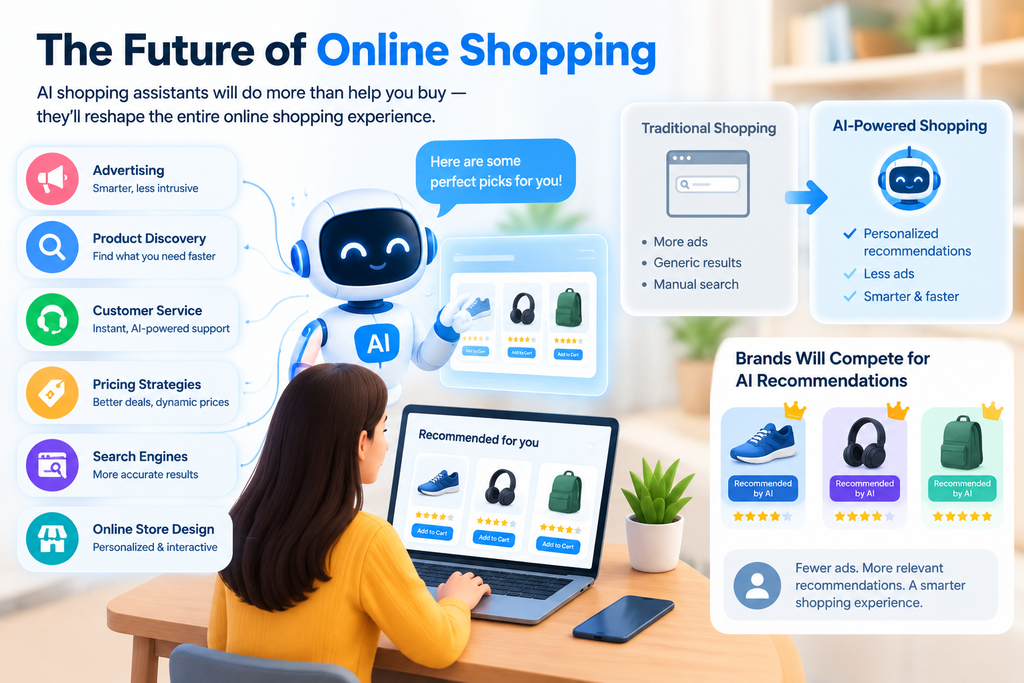
The development of AI shopping assistants could eventually change more than the way people purchase products. It could influence advertising, product discovery, customer service, pricing strategies, search engines, and even how businesses design their online stores. Instead of competing only for clicks and website visits, companies may increasingly compete for inclusion in AI-generated recommendations.
This could also create a new type of digital competition where brands try to become the products that AI systems consider most relevant. The result could be a shopping environment where consumers see fewer advertisements and more personalized recommendations, although this will depend heavily on how transparent and independent AI systems become.
Final Thoughts: Is AI the Future of Shopping?
AI shopping assistants could become one of the most important developments in e-commerce heading into 2027. The technology is still developing, and fully autonomous shopping is not yet a universal reality. Privacy, payment security, consumer trust, inaccurate recommendations, commercial influence, and the need for human approval will all affect how quickly agent commerce develops.
However, the direction of the industry is becoming increasingly clear. Instead of asking consumers to search, compare, read dozens of reviews, and click through countless product pages, future AI systems could understand their goals and handle much of the research automatically. The biggest question for 2027 may therefore not be “Will people continue shopping online?” but rather “How much of online shopping will people still need to do themselves?
”If AI shopping assistants become accurate, secure, transparent, and trustworthy, the answer could be surprisingly simple: far less than we do today.
Hashtags
#AIShopping #AIShoppingAssistants #AI2027 #AgenticCommerce #AITechnology #FutureOfShopping #OnlineShopping #Ecommerce #AIAutomation #AITrends #FutureTechnology #SmartShopping #ArtificialIntelligence #TechTrends #DigitalCommerce
Keywords
AI Shopping Assistants 2027, AI shopping assistant, AI shopping 2027, AI-powered shopping, agent commerce, AI online shopping, future of online shopping, AI product recommendations, AI shopping technology, future of e-commerce 2027, smart shopping, AI automation, personalized shopping, artificial intelligence in e-commerce.