
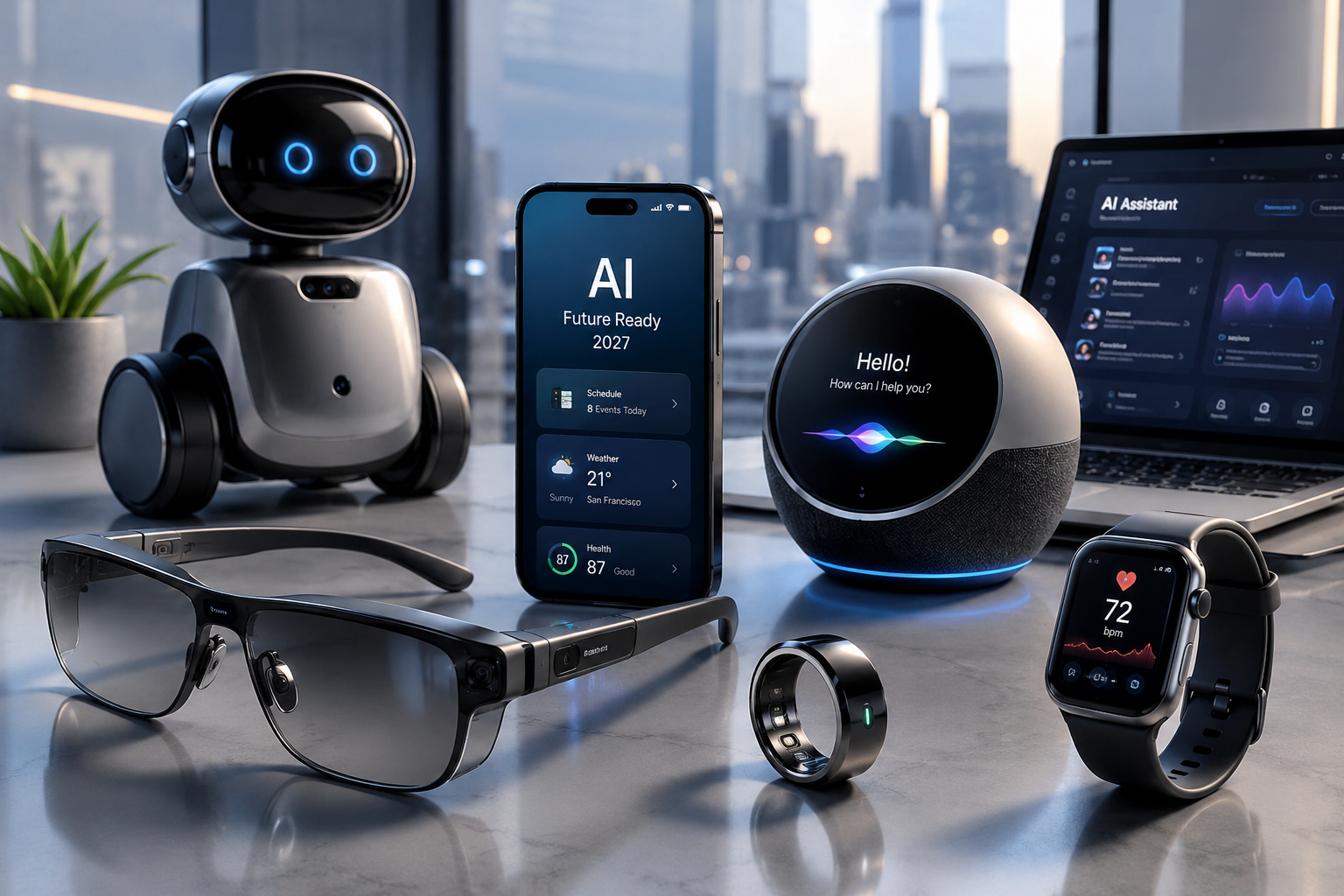
Artificial intelligence is transforming the way people work, communicate, travel, and manage their homes. By 2027, AI-powered gadgets could become even more useful, offering smarter assistance, improved automation, and more personalized digital experiences. From intelligent smart glasses to home robots and next-generation laptops, emerging technologies are expected to make everyday tasks more convenient.
For consumers in the United States and the United Kingdom, the growing range of AI devices may also create new opportunities to save time, improve productivity, and simplify daily routines. However, not every futuristic product will be affordable, practical, or ready for widespread adoption. Understanding the potential benefits, limitations, and privacy concerns of these technologies can help consumers make better decisions.
In this guide, TechLogic explores 10 AI gadgets to watch in 2027 and explains how they could influence everyday life.
1. AI-Powered Smart Glasses

AI-powered smart glasses are becoming an interesting category in wearable technology. Unlike traditional glasses, these devices can combine cameras, microphones, speakers, and AI assistants to provide hands-free digital support. Depending on the model, users may be able to ask questions, capture photos, listen to audio, or receive spoken information without constantly checking their smartphones.
By 2027, smart glasses could offer more useful translation tools, improved voice recognition, and context-aware assistance. For example, a Travellers visiting London or New York might use compatible glasses to understand foreign-language conversations or receive directions while walking. However, battery life, comfort, privacy, and the accuracy of AI-generated information will remain important considerations.
2. Personal AI Assistants and Screen less Devices

Personal AI assistants could become more capable of helping users manage their everyday responsibilities. Instead of responding only to simple voice commands, future assistants may be able to organist schedules, summarise emails, prepare reminders, and coordinate tasks across connected applications.
Some companies are also exploring devices that rely less on traditional screens. By 2027, these products could offer more natural interactions through voice, audio, and contextual assistance. Their usefulness will depend on how reliably they understand requests and whether they can work with the services people already use. Consumers should also examine what personal information these assistants collect and how that information is stored.
3. AI-Powered Home Robots

Home robots could become more helpful as advances in computer vision, navigation, and object recognition improve their ability to operate in domestic environments. Current household robots already perform specific jobs, such as vacuuming floors, mowing lawns, and monitoring certain areas of a home.
Future systems may combine several functions, including basic household assistance, object detection, reminders, and interaction with smart home devices. However, a robot that reliably cooks meals, organists an entire house, and completes almost any physical task remains a challenging engineering goal. In 2027, consumers should distinguish between practical, specialized robots and experimental general-purpose machines.
4. Next-Generation Smartphones with AI Features

Smartphones are likely to remain among the most important personal technology devices in 2027. Manufacturers are continuing to integrate AI into photography, writing assistance, voice recognition, translation, search, and device management. Future phones may also perform more AI tasks directly on the device, potentially improving response times and reducing the need to send certain information to remote servers.
For consumers, useful features could include smarter photo editing, automatic call summaries, personalized assistance, and improved accessibility tools. Nevertheless, the quality of these features will vary by device, software support, and subscription requirements. Before buying a new smartphone, users should compare battery life, processing power, update policies, privacy settings, and the AI features they will actually use.
5. AI Wearable and Smart Rings

Smart rings and advanced fitness wearable could make personal health and activity tracking more convenient. Depending on their sensors and software, these devices may monitor measurements such as movement, heart rate, sleep patterns, and activity levels.
In 2027, improved AI analysis could help users understand long-term patterns rather than simply displaying daily statistics. For example, an application might highlight changes in sleep routines or suggest adjustments to exercise schedules based on recorded activity. However, wearable measurements are not always medically accurate, and AI-generated wellness suggestions should not replace professional medical advice. Consumers should also consider comfort, battery life, subscription fees, and the handling of sensitive personal data.
6. AI-Powered Smart Home Devices

Smart home technology could become more coordinated as connected devices use AI to understand routines and respond to changing conditions. Smart thermostats, lighting systems, security cameras, and voice assistants may work together to automate household tasks and improve energy management.
For example, a compatible system could adjust heating based on occupancy, switch off unused lights, or send alerts when a security camera detects unusual activity. These features could be particularly useful for households in the USA and UK that want greater convenience or more efficient energy use. However, reliable internet access, device compatibility, cybersecurity, and privacy settings will remain essential when building an AI-powered home.
7. AI-Powered Laptops and Personal Computers
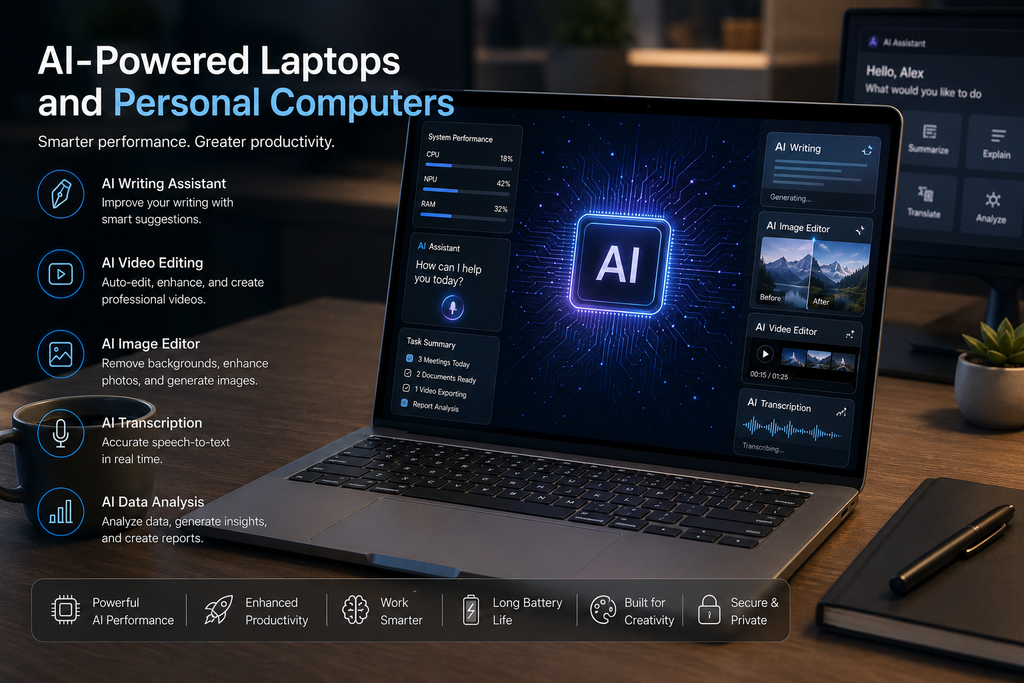
AI-enabled laptops and desktop computers are expected to remain important for students, professionals, creators, and businesses. Newer devices increasingly combine dedicated AI processing hardware with software designed to assist with writing, transcription, image editing, video production, and document analysis.
By 2027, compatible computers could handle more demanding AI workloads locally, depending on their processors, memory, and software optimization. This may improve responsiveness and help users work with certain data without relying entirely on cloud services. However, not every AI feature requires specialized hardware, and some advanced tools may still depend on an internet connection or paid subscription.
When choosing a laptop, buyers should compare performance, battery life, memory, storage, repair ability, and the length of software support instead of purchasing a device based on AI marketing alone.
8. AI-Powered Health and Fitness Technology

AI is also influencing consumer health technology through connected watches, fitness trackers, smart scales, and home monitoring devices. These products can analyses recorded information to identify patterns, provide activity summaries, and encourage healthier routines.
In the future, some devices may offer more personalized fitness recommendations and improved alerts based on changes in recorded measurements. Nevertheless, consumers should understand the limitations of these systems. An AI tool cannot automatically provide a reliable diagnosis simply because it analyses health data. Medical claims should be supported by appropriate evidence, and important health concerns should be discussed with qualified professionals.
9. AI Security Cameras and Home Protection Gadgets
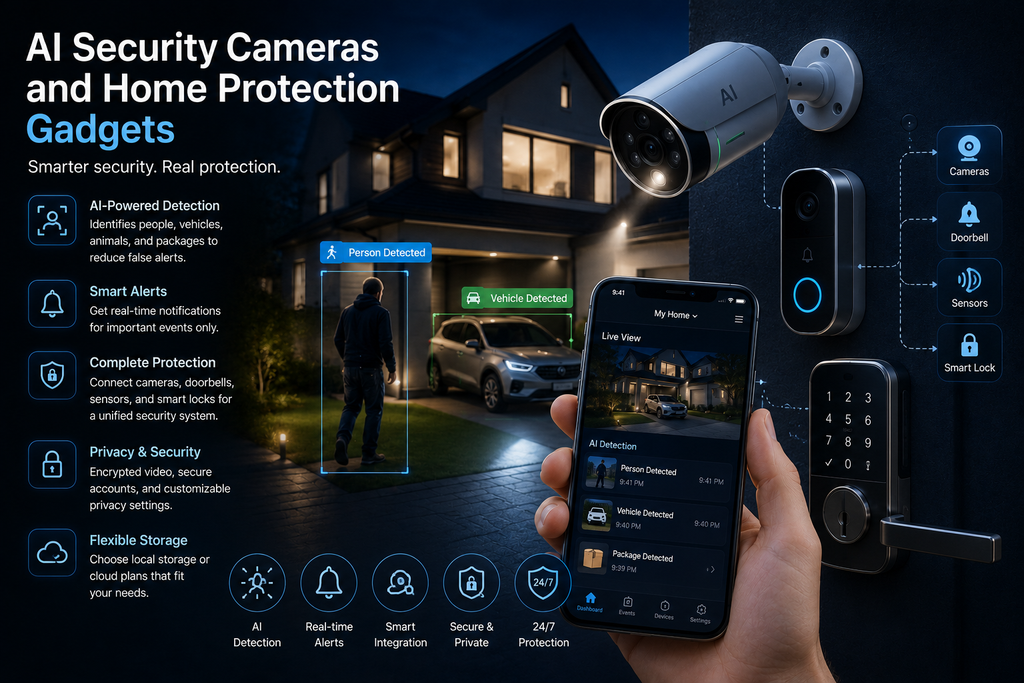
AI-powered security gadgets may become more sophisticated by distinguishing between different types of movement and reducing unnecessary alerts. Depending on the product, a security camera might identify people, vehicles, or animals and notify homeowners when a particular event occurs.
Future systems could also connect cameras, doorbells, sensors, and smart locks to create more coordinated security routines. These tools may be useful for homeowners and renters, but they require careful configuration. Consumers should check video storage policies, encryption, account security, subscription costs, and whether footage is processed locally or uploaded to external servers.
10. AI Translation and Communication Devices
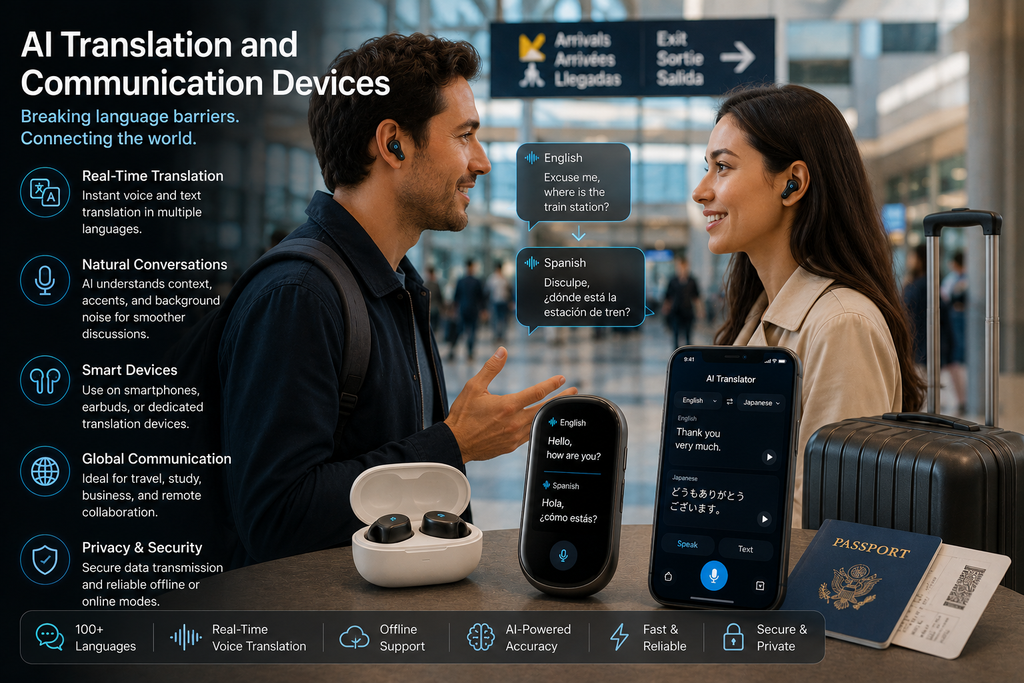
AI-powered translation tools could make communication easier for international travellers, students, remote workers, and businesses. Smartphones, earbuds, and dedicated translation devices can already support certain speech and text translation functions.
By 2027, improvements in speech recognition and language models could make these tools more natural and useful in everyday conversations. However, translation quality may still vary depending on accents, background noise, technical terminology, and internet connectivity. Users should avoid relying entirely on automated translation for important legal, medical, or other high-stakes conversations.
AI Gadgets to Watch in 2027: Comparison Table
The following table compares the potential uses of these technologies. Availability, pricing, and capabilities will vary by manufacturer, and future features are not guaranteed.
| 𝐀𝐈 𝐆𝐚𝐝𝐠𝐞𝐭 | 𝐏𝐨𝐭𝐞𝐧𝐭𝐢𝐚𝐥 𝐌𝐚𝐢𝐧 𝐁𝐞𝐧𝐞𝐟𝐢𝐭 | 𝐁𝐞𝐬𝐭 𝐒𝐮𝐢𝐭𝐞𝐝 𝐅𝐨𝐫 | 𝐊𝐞𝐲 𝐋𝐢𝐦𝐢𝐭𝐚𝐭𝐢𝐨𝐧 |
| AI smart glasses | Hands-free assistance | Travellers and commuters | Battery life and privacy |
| Personal AI assistants | Task management | Busy professionals | Data access and reliability |
| Home robots | Household automation | Homeowners | Cost and limited capabilities |
| AI smartphones | Smarter daily tasks | General consumers | Feature availability |
| Smart rings | Activity and sleep tracking | Fitness enthusiasts | Sensor limitation |
| Smart home devices | Automated routines | Connected households | Compatibility and security |
| AI laptops | Productivity support | Students and professionals | Hardware and subscription costs |
| Health gadgets | Personal data tracking | Health-conscious users | Accuracy and medical limitations |
| AI security cameras | Intelligent alerts | Homeowners and renters | Privacy and storage costs |
| Translation devices | Language assistance | Travellers and businesses | Translation errors |
Will AI Gadgets Be Worth Buying in 2027?
Whether an AI gadget is worth buying will depend on its practical value rather than the number of AI features advertised. A useful device should solve a real problem, work reliably, receive regular security updates, and offer transparent privacy controls. Consumers should also consider the total cost, including subscriptions, accessories, repairs, and replacement batteries.
For many people, an AI-enabled smartphone, laptop, or smart home device may provide more immediate value than an experimental wearable or expensive home robot. Early adopters may enjoy exploring new capabilities, but waiting for independent reviews can help other consumers avoid paying premium prices for features that are still developing.
Final Thoughts
AI gadgets could become more capable and accessible in 2027, creating new opportunities in communication, home automation, personal computing, fitness, and everyday productivity. Smart glasses, AI assistants, next-generation smartphones, and connected home devices are particularly interesting areas to follow, although their future capabilities will depend on technical progress and real-world demand.
For consumers in the United States and the United Kingdom, the smartest approach is to focus on usefulness, reliability, security, and long-term value rather than buying a device simply because it carries an AI label. As new products arrive, TechLogic will continue exploring emerging technology trends and helping readers understand which innovations may genuinely improve everyday life.
Hashtags
#AIGadgets2027 #FutureTechnology #ArtificialIntelligence #AIGadgets #TechTrends2027 #SmartGlasses #AIAssistants #HomeRobots #AISmartphones #SmartRings #SmartHomeTechnology #AILaptops #HealthTech #AISecurityCameras #AITranslation #FutureGadgets #EmergingTechnology #TechInnovation #SmartDevices #TechLogic
Keywords
AI Gadgets 2027, Future Technology 2027, AI Gadgets of the Future, Artificial Intelligence Gadgets, Best AI Gadgets in 2027, Future Tech Gadgets, Upcoming AI Technology, Smart Gadgets 2027, AI Technology Trends 2027, Next-Generation AI Devices, AI-powered smart glasses, personal AI assistants, AI-powered home robots, AI smartphones, AI wearable, smart rings, AI-powered smart home devices, AI-powered laptops, AI health and fitness technology, AI security cameras, AI translation devices, emerging technology trends, future gadgets that could change everyday life.


